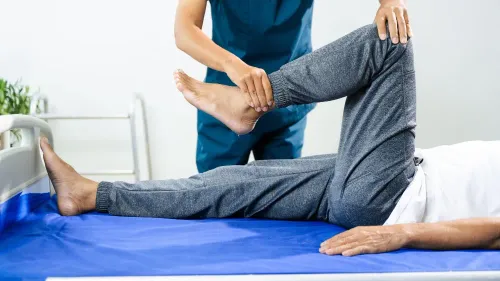
Pain travelling from the lower back or buttock into the leg is often described as sciatica. Some people also experience tingling, numbness, altered sensation, or weakness.
When looking for Sciatica Pain Relief Kharadi, patients may wonder whether they should rest completely, exercise through the discomfort, or begin physiotherapy. The appropriate choice depends on the underlying presentation and severity of symptoms.
Is Complete Rest the Answer?
Short periods of modifying aggravating activity may sometimes be necessary, particularly when symptoms are highly irritable.
However, prolonged inactivity can reduce general conditioning and make returning to normal activity more difficult.
The objective is usually not to remain completely inactive indefinitely. Instead, activity may need to be adjusted according to symptom behaviour and clinical guidance.
What About Exercise?
Exercise can play an important role in many rehabilitation programmes, but there is no single universal 'sciatica exercise.'
An exercise that is useful for one person may not suit another.
Selection can depend on:
- Symptom distribution
- Movement response
- Strength
- Mobility
- Neurological findings
- Daily activity requirements
- General health
- Stage of recovery
This is why randomly following several online routines at once can make it difficult to understand which movements are helping.
Where Does Physiotherapy Fit?
Physiotherapy provides an opportunity to assess the presentation before developing a rehabilitation strategy.
An evaluation may consider spinal and lower-limb movement, strength, sensation, reflexes where relevant, functional activities, and movements that influence symptoms.
Treatment can then be adapted according to the findings.
This may involve education, movement strategies, graded exercises, strengthening, mobility work, and progression toward normal activities.
Not Every Leg Pain Is Sciatica
Pain in the leg can originate from several structures and conditions.
Similarly, having lower-back pain and leg discomfort at the same time does not automatically establish a particular diagnosis.
Assessment becomes particularly useful when symptoms persist, recur, or include neurological changes.
Symptoms That Need Prompt Attention
Certain combinations of symptoms should not simply be managed with unsupervised exercises.
Urgent medical evaluation may be required for new bladder or bowel control problems, numbness around the saddle area, rapidly increasing leg weakness, or other significant neurological changes.
A history of major trauma or significant systemic illness can also change the appropriate pathway.
Comparing the Three Approaches
Rest can temporarily reduce exposure to aggravating activity, but excessive rest may limit recovery.
Exercise can help rebuild movement and capacity when appropriately selected, but generic exercises may not suit every presentation.
Physiotherapy combines assessment with individualized rehabilitation, helping determine which activities can be continued, modified, or progressively reintroduced.
For residents and professionals in Kharadi, Pune, Maharashtra, this can be particularly useful when symptoms interfere with commuting, sitting at work, walking, sleep, or exercise.
At Alam's Physio Care, physiotherapy for back and leg symptoms can begin with assessment of the individual's presentation rather than assuming every case requires the same routine.
The most useful approach to sciatica-like symptoms is therefore not choosing between 'rest' and 'exercise' in isolation. It is understanding the presentation first and using activity at an appropriate level while watching carefully for symptoms that require medical attention.
Keywords